The Neuroscience of Spatial Memory in Language Learning
Why Traditional Flashcards Fail
For decades, language learners have relied on 2D flashcards—both physical and digital. While spaced repetition software (SRS) like Anki fundamentally improved the timing of reviews, the interface remained flat.
You read a word. You think of the translation. You click a button.
This works, but it's grueling. It leads to cognitive fatigue because it ignores how human memory evolved to function.
Enter Spatial Memory
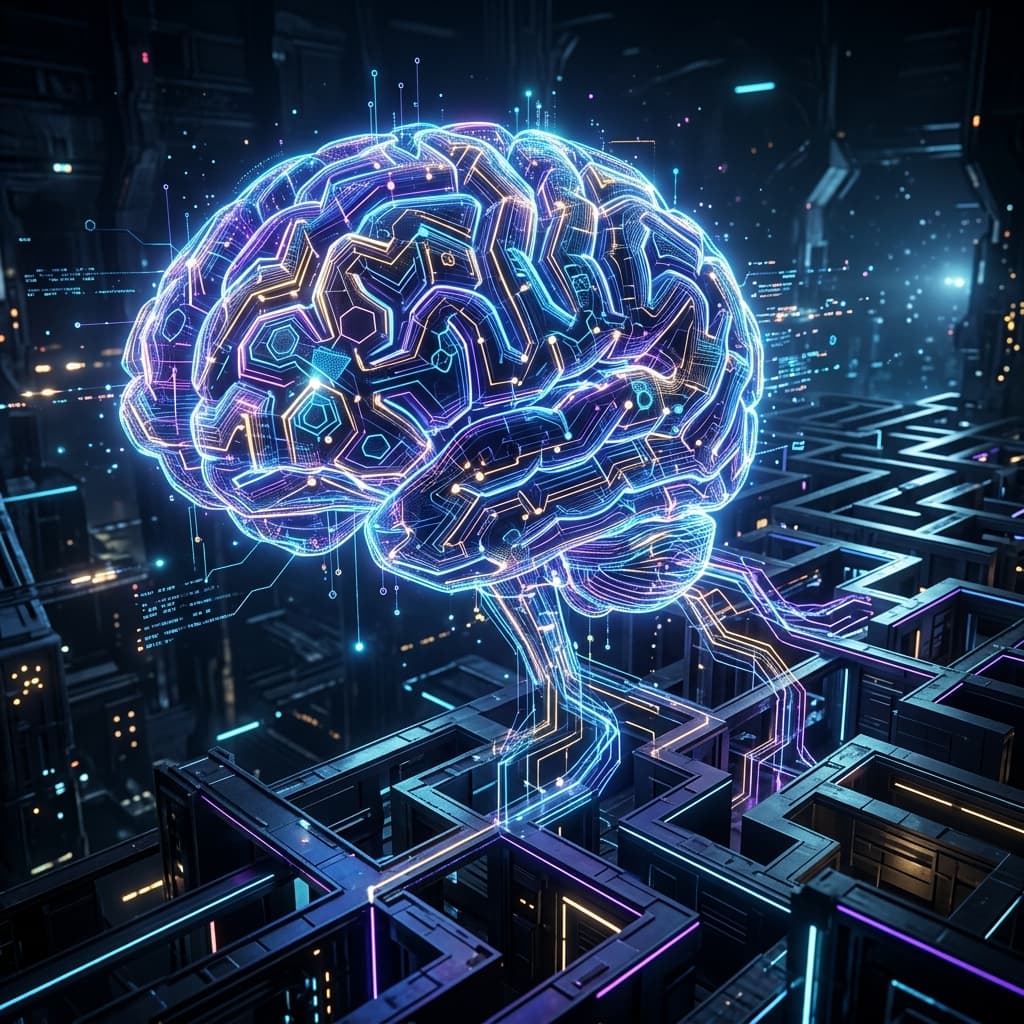
Human beings did not evolve to memorize lists of text on a glowing screen. We evolved as hunter-gatherers navigating complex 3D environments. Our brains are incredibly efficient at remembering where things are located in space. This is governed by the hippocampus, which builds cognitive maps of our surroundings.
When you play Recall Runner, you aren't just looking at the Japanese Kanji for "Water" (水). You are physically maneuvering your avatar to the left lane to collect it, dodging an obstacle on the right.
The Result?
- Dual Coding: You encode the memory linguistically and physically.
- Dopamine Release: Gamification triggers dopamine, a neurotransmitter critical for memory consolidation.
- Zero Fatigue: Because the experience feels like an arcade game, you can study for two hours without experiencing the burnout typical of traditional flashcard apps.
Stop grinding. Start playing.